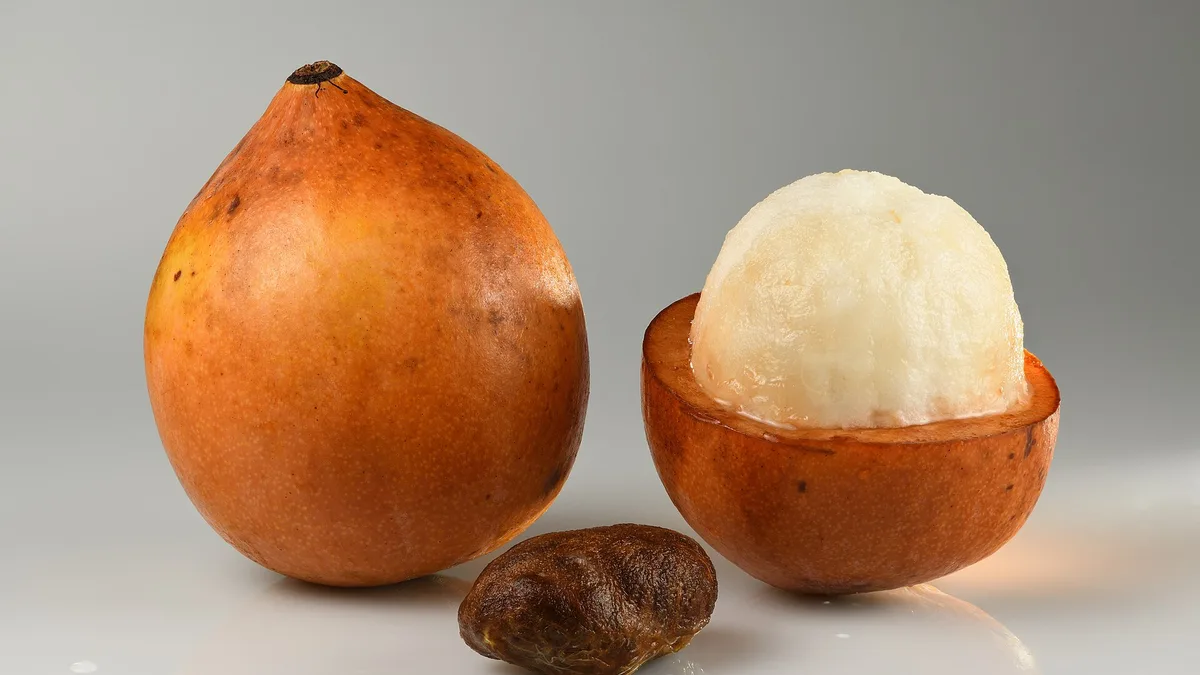
Fruits
| Composition name | Fruits |
|---|---|
| Perfumer | Olivia Giacobetti |
| House | Frédéric Malle |
| Fragrance family | Fruity floral |
| First created | 2000 |
| Top notes | Blackcurrant, Peach, Rhubarb |
| Heart notes | Rose, Peony, Plum |
| Base notes | Cedarwood, Musk |
Origin and history
The term "fruits" in perfumery refers to a broad category of fragrance notes derived from the aromatic compounds of edible fruits. Their use in Western perfumery became significant in the early 20th century, as advances in synthetic chemistry allowed for the creation of consistent and stable fruit accords. Prior to this, natural fruit extracts were largely impractical for fragrance due to their low yield and poor longevity. The citrus family, particularly bergamot, lemon, and orange, has a much longer history in perfumery, dating back centuries in the form of eaux de cologne. The modern expansion into berries, tropical fruits, and stone fruits accelerated in the latter half of the 20th century, aligning with cultural shifts towards lighter, more informal fragrances.
What it is for
Fruit notes in perfume serve primarily to provide immediate, recognizable top notes that create an inviting and often cheerful first impression. They are used to convey freshness, juiciness, and a sense of natural sweetness without relying solely on traditional floral or sugary gourmand elements. In contemporary compositions, fruit accords are frequently employed to soften and brighten heavier floral, woody, or oriental bases, making a fragrance more wearable and approachable. They are a cornerstone of many mainstream and celebrity fragrances, where their familiar and appealing character supports broad commercial appeal. Perfumers also use tart or green fruit notes, like blackcurrant or rhubarb, to introduce a sophisticated sharpness or a crisp, modern edge. Ultimately, fruit notes function as an accessible olfactory bridge between the natural world and abstract perfume fantasy.
Overview
Fruit notes in fragrance are rarely, if ever, derived directly from the fruit itself; instead, they are sophisticated reconstructions using both natural and synthetic aroma chemicals. Common natural components include essential oils from citrus peels, while the vast majority of other fruit notes, like peach, apple, mango, or strawberry, are created synthetically. These synthetic molecules, such as aldehydes C-14 (peach) or fructone (apple), provide perfumers with consistent, powerful, and long-lasting tools that natural extracts cannot offer. A fruit note in a perfume is typically a complex accord blending several chemicals to mimic the full experience of the fruit's flesh, skin, and sometimes even the leafy stem. They are most prominent in the top and heart notes of a fragrance, though some modern base materials can impart a fruity nuance that persists. The category is incredibly diverse, encompassing citrus, berry, tropical, stone, and melon sub-families, each with its own olfactory character and technical challenges.
What to know
A key technical fact is that many fruity accords, particularly those mimicking red berries and tropical fruits, rely heavily on lactone and ester compounds, which can sometimes be perceived as cloying or "cheap" if overdosed. The perceived quality of a fruit note is less about its natural origin and more about the skillfulness of its blending with other notes to avoid a simplistic, candy-like effect. Consumers should be aware that a fragrance listing "peach" or "blackberry" as a note is describing an artistic interpretation, not the presence of a natural peach or blackberry extract. Fruit notes have a strong cultural association with youthfulness and casual wear, which can limit their perceived appropriateness in formal or traditional contexts. In niche perfumery, fruit notes are often used in unexpected, deconstructed, or over-ripe ways to create more avant-garde or challenging compositions. It is also important to understand that fruit-forward fragrances, particularly those dominated by citrus and berries, often exhibit weaker longevity on skin compared to florals or orientals, as their key molecules are highly volatile.
Common questions
A frequent question is whether fruit-based perfumes are suitable only for women or for younger wearers; while they are heavily marketed to that demographic, many classic and modern unisex fragrances expertly incorporate citrus, fig, or tart fruits in a gender-neutral way. People often ask why their strawberry or watermelon perfume smells artificial; this is typically due to the specific synthetic molecules used, which are designed for impact and durability rather than photorealistic accuracy. Many inquire if natural fruit essential oils are better, but for most non-citrus fruits, natural options are either nonexistent or prohibitively expensive and unstable for perfumery. Consumers commonly question the longevity of fruity fragrances and are advised to look for compositions where the fruit note is supported by or transitions into longer-lasting heart and base notes like woods, musks, or amber. Another common query is about the difference between "fruity" and "gourmand" categories; fruity scents emphasize the fruit itself, often with floral or fresh companions, while gourmands focus on the cooked, sweetened, or dessert-like aspect of food. Finally, individuals wonder if they can layer a fruity perfume with another scent; it is possible, but best done with scents sharing a common note (like vetiver or rose) to avoid creating a muddy or discordant accord.
Pros and cons
A significant pro of fruit notes is their immediate accessibility and ability to make a fragrance feel friendly, energetic, and easy to wear, which is ideal for casual or office settings. They offer a wide spectrum of choices, from bright and clean citrus to dark and wine-like berries, allowing for nuanced expression. A major con is that mainstream reliance on certain fruity accords, particularly a sweet, shampoo-like "berry cocktail," has led to olfactory fatigue and a perception of genericness among seasoned fragrance enthusiasts. Consumers often regret choosing a fruit-dominated fragrance when they discover its poor longevity or when the promised complex dry-down never materializes, leaving only a faint, simplistic sweetness. The most common mistake is selecting a fragrance based solely on the appealing top note without testing it on skin and waiting through the full evolution, as many fruity openings can quickly vanish or turn sour with individual body chemistry. Furthermore, a fruit note that is too loud or poorly integrated can clash with formal attire or environments, projecting immaturity.
Who it suits
Fruit-forward fragrances particularly suit individuals seeking a bright, uplifting, and non-threatening scent profile for daily wear in casual or professional environments. They are a traditional choice for those new to perfumery, as the notes are easily recognizable and provide a comfortable entry point beyond simple florals. People with a preference for clean, shower-fresh, or sporty aesthetics often find citrus and melon notes align well with their personal style. Certain sophisticated fruity chypres or fruity florals, which blend tart fruits with mossy or floral bases, can suit wearers looking for a more complex, modern, and slightly unconventional character. However, individuals who prioritize projection, extreme longevity, or who wish to convey a sense of gravitas, tradition, or opulence may find most fruity-centric compositions lacking in depth and resonance. Ultimately, the best fruit-based fragrances suit those who appreciate them as a clever, abstracted part of a larger olfactory picture, not just as a literal smell of fruit.