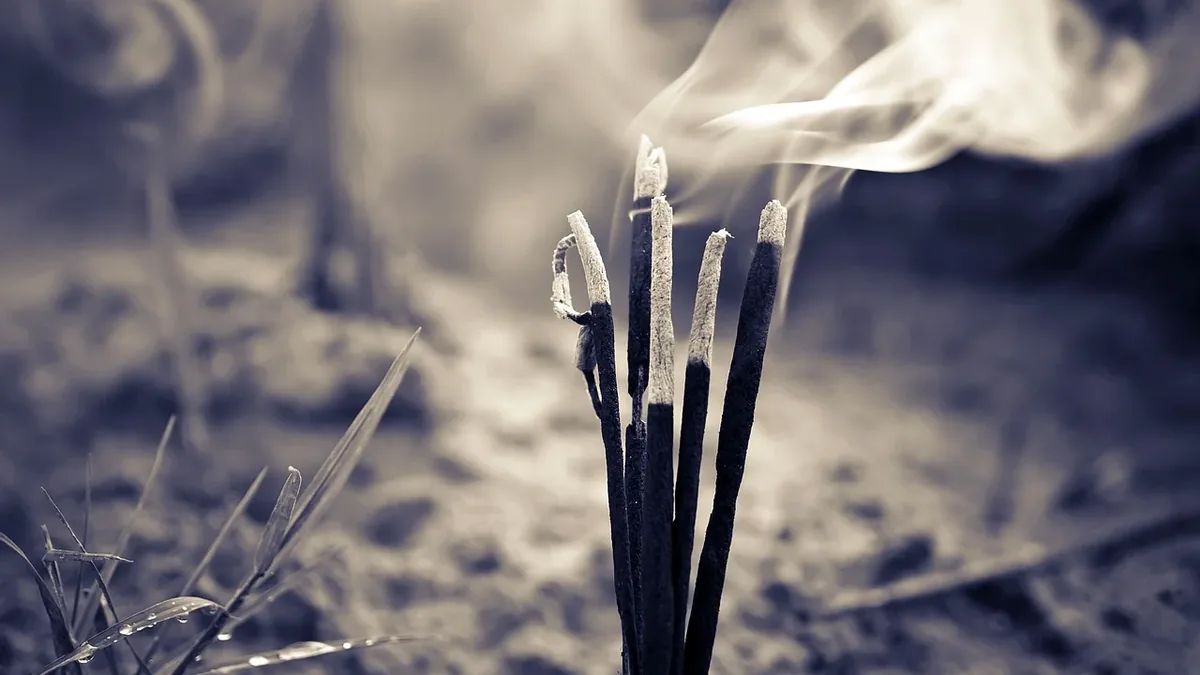
Smoky & Incense
| Composition name | Smoky & Incense |
|---|---|
| Note type | Accord |
| Fragrance family | Woody / Aromatic |
| Scent profile | Smoky, resinous, woody |
Origin and history
Smoky & Incense is a fragrance accord, not a single commercial perfume, with its origins deeply rooted in the historical use of sacred incense materials across various cultures. The conceptual pairing of smoky and incense notes in modern perfumery draws primarily from ancient religious and ceremonial practices, particularly those from regions like the Middle East, South Asia, and the Catholic liturgical tradition in Europe. The specific combination as a named olfactory theme gained prominence in Western niche perfumery during the late 20th and early 21st centuries. This period saw perfumers exploring more challenging, atmospheric, and spiritually evocative raw materials beyond traditional floral and citrus structures. The accord leverages materials that have been traded and used for millennia, such as frankincense from the Arabian Peninsula and myrrh from Northeast Africa. Its modern interpretation as a standalone fragrance character is therefore a revival and artistic abstraction of these ancient practices for personal wear.
What it is for
The Smoky & Incense accord is primarily used in perfumery to create fragrances that evoke contemplation, solemnity, and a sense of ancient ritual. It serves to provide an atmospheric, often meditative quality to a perfume composition, moving beyond mere personal scent into the realm of experiential aroma. This accord is employed to add depth, mystery, and a resinous richness that can anchor lighter top notes and provide long-lasting dry-down character. In a practical sense, these notes are used to counterbalance sweeter or fruitier elements in a fragrance, introducing a dry, austere, and sometimes austere contrast. The theme is also utilized in scented products like candles and home fragrances to create a specific ambiance of tranquility or sacred space within an environment. Its purpose is fundamentally olfactory and emotional, aiming to transport the wearer or user through scent association.
Overview
The Smoky & Incense accord is an olfactory blend characterized by the interplay of dry, resinous, and often woody notes with the distinct scent of combustion or burning materials. Key components typically include various incense resins like frankincense (olibanum), myrrh, and benzoin, which provide a balsamic, church-like character. The smoky aspect is rendered through materials such as birch tar, cade oil, labdanum, or certain synthetic aromachemicals that replicate the scent of wood smoke, burnt wood, or even incense ash. The overall effect is rarely a literal reproduction of church incense but rather an artistic interpretation that can range from stark and austere to soft and comforting. It often incorporates complementary notes like dry woods (cedar, vetiver), spices (black pepper, saffron), or leather to enhance its texture and complexity. The accord is known for its notable longevity on skin and its ability to project a serene yet powerful aura.
What to know
It is important to know that fragrances built around a Smoky & Incense theme are often considered niche or avant-garde, and they can be polarizing to a general audience. The smokiness in particular can be perceived as harsh, medicinal, or reminiscent of barbecue or burnt rubber by those unfamiliar with such scent profiles. True incense materials like olibanum are often steam-distilled or extracted to produce an essential oil or resinoid, which smells cleaner and more refined than the actual smoke from burning the raw resin. The quality and sourcing of these raw materials significantly impact the final fragrance, with natural ingredients like Somalian frankincense or Himalayan cedar being highly prized. Consumers should be aware that "incense" in perfumery is a broad descriptor and can refer to the Catholic church incense style, the sweeter Japanese temple incense (often using sandalwood and spices), or the drier Middle Eastern bakhoor style. Testing these fragrances on skin is crucial, as body chemistry can dramatically alter the balance between the smoky and resinous elements.
Common questions
A common question is whether Smoky & Incense perfumes smell exactly like a church or temple, to which the answer is usually no; they are more abstract and refined artistic interpretations. People often ask about the difference between frankincense and myrrh, with frankincense being brighter, piney, and lemony, while myrrh is darker, more medicinal, and slightly licorice-like. Many inquire about the wearability of such scents, concerned they might be too overpowering or strange for office settings, which is a valid concern as some intense renditions are better suited for personal enjoyment or evening wear. Another frequent question involves the longevity and sillage of these fragrances, which are typically quite strong due to the base-heavy nature of the ingredients, meaning they last long but may not project as a sweet cloud. Users also commonly ask how to layer or pair these scents, often being advised to wear them alone as they are complete statements, but they can sometimes be softened with a simple vanilla or musk lotion. Finally, there is often confusion between "smoky" and "woody," with smoky referring specifically to the scent of combustion, whereas woody describes the scent of the raw, untreated wood itself.
Pros and cons
A significant pro of the Smoky & Incense accord is its exceptional longevity and depth, providing a scent experience that evolves over many hours and possesses a serious, contemplative character. It offers a distinctive alternative to mainstream commercial fragrances, appealing to those seeking individuality and a connection to historical or spiritual aromas. However, a major con is its divisive nature; the smoky element can be challenging and is frequently perceived as unpleasant, medicinal, or simply unwearable by a large segment of the population. Common mistakes include over-applying these potent fragrances or wearing intensely smoky compositions in close-quartered professional or social settings, which can lead to negative feedback. Many who regret choosing a fragrance from this category do so because they purchased based on the intriguing concept without testing it on their skin first, discovering that the smoke amplifies unpleasantly or the incense turns sour. Furthermore, the quality spectrum is vast, and cheaper versions may rely on harsh, synthetic smoke notes that smell acrid and one-dimensional compared to well-balanced, high-quality compositions.
Who it suits
The Smoky & Incense accord best suits individuals with a developed perfume palate who are bored with conventional fresh, sweet, or floral scents and seek something more atmospheric and intellectual. It appeals to those who appreciate minimalist aesthetics, avant-garde art, or have a personal interest in history, spirituality, or different cultural practices involving incense. This fragrance theme often resonates with older wearers, not necessarily by age but by scent experience, who are looking for sophistication and quiet confidence rather than crowd-pleasing appeal. It is well-suited for cooler weather, especially autumn and winter, where its warm, resinous qualities feel comforting and appropriate. People who enjoy spending time in nature, particularly around wood fires, or who have a fondness for antique shops, old libraries, and sacred architecture may find an emotional resonance with these scents. Ultimately, it suits the confident individual who wears fragrance primarily for their own enjoyment and contemplation rather than for external compliment.